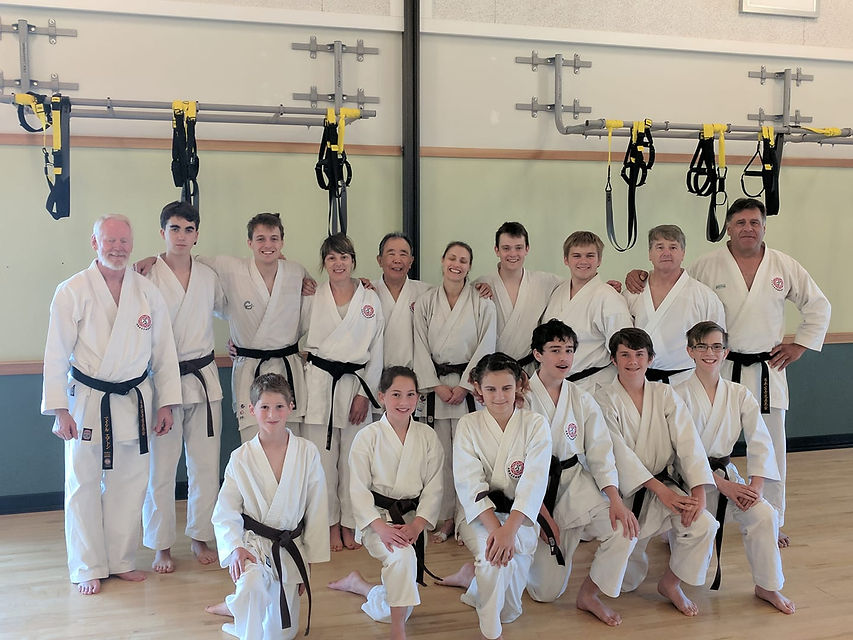


Kobudo
As long as humans have had conflict they have sought to dominate their enemies and gain the upper hand or simply to protect themselves. Kobudo translates to old martial way or art, in particular using weapons. The prohibition of metal weapons put in place in 1477 by King Sho Shin on Okinawa was later reinstated during the invasion of the Satsuma clan in 1609. This ban on weapons played a significant role in the development of Okinawan martial arts like tode later know as karate in Japan, Not being able to use weapons created the search for knowledge of empty handed arts. The use of farm tools or ordinary objects for weapons made it easy to hide in plain sight the true reason for carrying them. Kobudo is and extension of the empty hand and therefore is beneficial in both learning it new or improving the empty hand understanding through weapons training.

SIGNIFICANT DEVELOPEMENT
The use of weapons is as old as time. Whether it was a sharp rock attached to a stick or a farm implement. It gave people the advantage they needed to survive. Having skill with a weapon was as important as having one. Villages or clans or family units gave people more strength and safety by being in groups. These groups needed to know and study what was discovered to work in combat and be able to use it. Training and simulated combat became the way to passing knowledge on through routines and simulations, now known as Kata. As many people were illiterate and or didn't want to tip of their adversary of what they knew by putting it in writing knowledge was passed mostly by word of mouth. This was a slow process and often filled with errors or interpretation mistakes by the facilitator of the information. The use of patterns and drills became important in the transmission of knowledge. The progression of Kobudo stalled with the invention of gunpowder as an untrained assailant could overcome any amount of knowledge and training . in the modern times the training changed to be more of an art form and the urgency of protecting ones life was no longer the main purpose of the Kobudo training.
Instructors in our lineage

Yabiko Moden (1878-1941)
Born in Shuri in 1878, was a school teacher whos passion was the martial arts. Studying karate under Itosu and Haigonna. Later he formed the Ryukyu Kobojutsu kinkyukai to save the history and way of Okiowan weapons which were in danger of disappearing. Upon his death Taira Shinken took over the quest.

Kenwa Mabuni (1889-1952)
Founder of one of the major styles of karate. The name Shito Ryu was coined by Kenwa Mabuni using the ITO from Anko Itosu and the SHI for the nickname of Kanryo Higashionna, both his karate instructors. He was also a Kobudo expert who learned bo and sai from Seisho Arakaki (1840-1918)
Later he trained Kobudo with Yabiki Moden (1878 -1941) and his instructor Chinen Sanda (1842- 1928), the primary teacher of Taira Shinken (1897-1970). Later Kenwa Mabuni would become Taira Shinkens instructor. Kenwa Mabuni was a police officer.

Taira Shinken (1897-1970)
regarded as the instructor who was primarily responsible for maintaining and preserving Kobudo and bringing it into modern times. Taira ( born Maezato
Shinken) trained Kobudo with Yabiko Moden.Taira would also train kobudo under Mabuni. He formed the Ryukyu Kobudo Hozon Shinkokai organization to aid in the preservation of the Kobudo and to open the knowledge up to others. He catalogued over 35 classical Kobudo kata. He lived and trained with Ryushu Sakagami for several years before moving back to Okinawa permanently. Among his Students were Fumio Demura (1938-2023) founder of Genbukai Karate and Seiko Suzuki (1936- Present) (founder of Seiko Kai Karate Do)

Ryushu Sakagami (1915-1993)
Awarded the distinction of being named the 3rd generation Soke of itosu lineage by Kenwa Mabuni his instructor, Ryushu Sakagami formed the ShIto Ryu Itosu-Kai organization.
He studied Kobudo under Yabiku Moden and Kenwa Mabuni. He was awarded a 8th Dan in Kobudo by Taira Shinken. in the early 1960s. He Formed Kongo Ryu Kobudo in 1984.
Sakagami Sensei was the instructor of Sensei Fumio Demura, Seiko Suzuki Akira Sato, until his passing.
He travelled to Canada many times to teach Karate and Kobudo.

Fumio Demura (1938-2023)
Perhaps the most famous of the Shito Ryu instructors because of his involvment with hollywood movies, (in particular the Karate Kid.) Fuimio brought kobudo to the USA in the 1960s and quickly became a sought after instructor. Fumio Demura trained Karate under Ryushu Sakagami and Kobudo under Taira Shinken. He formed the Genbukai association and had dojos worldwide. He travelled all over the world passing on his knowledge. He visited Canada many times and was good friends with Akira Sato.

Seiko Suzuki (1936- Present)
Seiko Suzuki Sensei was the master under Ryushu Sakagami until Sakagamis passing in 1993.
He was awarded a 7th Dan in Kobudo by Taira Shinken and has an 8th Dan in karate awarded by Ryushu Sakagami.
He decided to form the Seiko Kai Shito Ryu assn and became Soke and 9th Dan. He travelled to Canada many times to teach karate and Kobudo.

Akira Sato
Akira Sato trained with Ryushu Sakagami and his home dojo was Seiko Suzuki dojo.
he came to Canada in 1970 for what was thought to be several years. He was coheiresed into staying and soon opened a dojo. Sensei Sato formed the Sato Kai assn in 2017. Sensei Sato trained in both karate and kobudo buy started to specialize in karate.
He has produced many national and international champions

Roy Tippenhauer 1960-present
Sensei Roy started his training in 1980 under the itosukai assn. In 1993 after Ryushu Sakagami passed he joined the newly formed Seiko Kai organization. In 2017 he joined the newly formed Sato ha Shito Ryu assn. Since 1985 Sensei has had his own dojo in Campbell River BC Canada. He has produced many national champions and international competitors. Roy was a Silver medalist at the 2010 Karate Canada nationals in kobudo the only time it was offered. Sensei has trained in Kobudo since 1980.
He has trained with Ryushu Sakagami, Fumio Demura and Seiko Sfuzuki.
He recieved his Nidan in kobudo from Seiko Suzuki in 2007.
In 2017 after forming Sato Ha his Sensei Akira Sato asked Roy Tippenhauer to become the Chief Kobudo instructor of Sato Ha Kobudo and was awarded a Yondan in kobudo.
Example of Kobudo Weapons
Although there are many examples of ancient weapons used in the defence of Ancient people these pictured below are the majority of weapons trained int the art of Ryukyu Kobudo. In places where these are illegal other weapons will be included. Weapons are only offered to students who have shown a mature and proper attitude.

Bo
common weapon made from bamboo or whatever material was available. Several different lengths.

Nunchaku or Muge
two sticks tied together used for striking or strangling. Used to deflail rice and muge was a horse bridal

Sai
Metal fork like weapon

Tonfa

Kama
used in the cutting of rice in the patties

Tekko
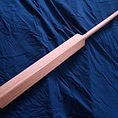
Eku Bo
a paddle type weapon used in okinawa by fishermen

Rochin and Tinbe

Surugin